
You prevent most sports injuries with four things. Warm up properly, build training load gradually, fix your technique and gear, and stop when pain signals a problem. Injuries rarely arrive in one dramatic moment on the field. They build quietly through repeated strain, skipped recovery, and loads the body was never given time to absorb.
Whether you compete or stay active as a way of life, the risk is real. So is your ability to lower it.
Common Sports Injuries and How They Start
Sports injuries fall into two groups. Acute injuries happen in an instant, like an ankle rolling under a bad landing. Overuse injuries build across weeks of repetitive load, faulty mechanics, or thin recovery. The second group costs athletes far more training time, and prevention has the most power over it.
| Injury Type | How It Starts | Common Examples |
| Acute | Sudden force, impact, twist, or fall | Ankle sprains, ligament tears, dislocations, concussions |
| Overuse | Repetitive load without adequate recovery | Shin splints, tendonitis, stress fractures, rotator cuff strain |
The sport shapes the pattern. Runners tend to break down at the shin and knee, while swimmers and throwers feel it in the shoulder. Contact athletes carry the risk at the neck and head.
Across sports, the injuries we treat most often in active adults include:
- Neck pain and cervical strain from contact or poor training posture
- Back pain from spinal loading, heavy lifting, or repetitive flexion
- Shoulder pain from overuse or faulty throwing and pressing mechanics
- Hip and leg pain from running, cutting movements, or muscle imbalance
- Whiplash and cervical injuries in contact sports
- Chronic pain from overtraining without adequate recovery
- Wrist and elbow pain from racket sports, gymnastics, or repetitive gripping
Read: What Counts As A Sports Injury?
How to Prevent Sports Injuries With Smarter Training Habits
Warm Up and Cool Down With Intention
Cold tissue tears more easily than warm tissue. Five minutes of light movement raises tissue temperature, opens joint mobility, and switches on the working muscles. Dynamic stretching afterward prepares the specific ranges your sport demands.
Cooling down earns the same attention. Static stretching and controlled breathing help the nervous system drop out of high output. Both reduce delayed soreness and support tissue repair. Skip the cool-down for a season and the stiffness compounds.
Train Smarter, Not Just Harder
More volume does not always mean better results. Progressive overload works when it climbs gradually and gives tissue time to adapt between sessions. Pushing through pain, spiking training load week to week, or cutting rest days leads reliably to overuse injuries.
Strength and mobility work outside your sport matters. Athletes who train only the movements their sport demands develop imbalances that overload the surrounding joints. Cross-training and targeted mobility work close those gaps early.
Get Technique, Gear, and Footwear Right
Form breaks down before tissue does. A squat that rounds under load routes force somewhere the spine was never built to take it. The same goes for a serve that drops the elbow or a stride that collapses inward. Coaching or a movement assessment catches the fault while it is still cheap to fix.
Gear carries the same weight. Helmets, mouthguards, and pads have to fit correctly, not merely exist. Running shoes lose shock absorption somewhere between 250 and 500 miles. A runner logging 10 miles a week needs a fresh pair roughly once a year.
A Pre-Training Checklist for Sports Injury Prevention
Hydration, fuel, and sleep set the ceiling on how much load your tissue can absorb. Dehydration raises cramp and heat illness risk, and under-fueling pushes the body to break down muscle to keep going. Short sleep slows tissue repair while dulling the coordination that keeps you out of bad positions.
Run a quick self-assessment before each session:
- Rested and adequately fueled
- No lingering soreness or joint stiffness that needs attention
- Warm-up completed for every area about to be loaded
- Equipment appropriate, fitted, and in good condition
- Hydrated across the last few hours
Thirty seconds is enough. The habit builds the body awareness that catches small problems before they turn into injuries.
Sports Injury Warning Signs You Should Not Train Through
Most injuries announce themselves first. A tightness that will not release, a joint that clicks under load, a pain that returns after every session. The instinct is to push through, which turns a few days of rest into a few weeks of rehab.
Schedule an evaluation if you notice any of the following:
- Back or neck pain that does not improve after rest
- Pain that travels into the arm, hand, hip, leg, or foot
- Numbness, tingling, or unexplained weakness in a limb
- Stiffness that limits normal movement or range of motion
- Sharp or shooting sensations during or after activity
- Headaches or shoulder tension that developed after impact
- Trouble sleeping because of pain or discomfort in the spine
Early evaluation means a faster return to training and a lower chance the problem turns chronic. We keep same-day appointments open at Amazing Spine Care, so nothing has to worsen while you wait for a slot.
Read: Treating Sports Injuries and Chronic Pain
How Chiropractic Care Prevents Sports Injuries
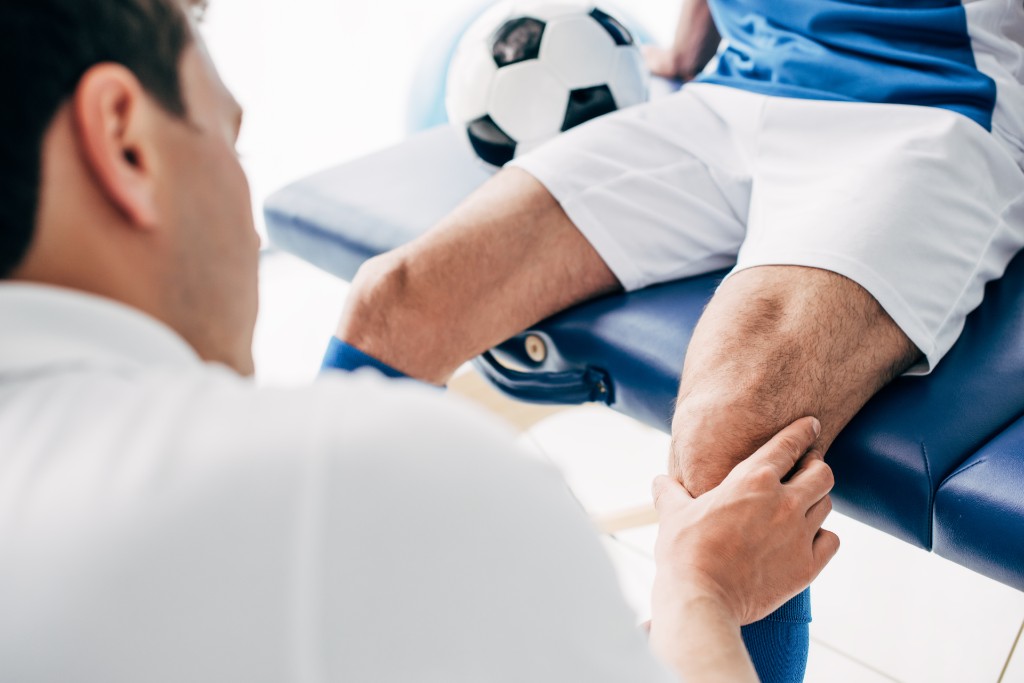
Chiropractic treatment maintains spinal alignment, restores joint mobility, and releases the restriction repetitive training lays down before it becomes pain. For athletes, our adjustments support flexibility, balance, and coordination. They also lower muscle tension between sessions and speed recovery after competition.
Physical therapy closes the other half of the gap. Our therapists identify movement faults, strengthen the weak links, and build the support your body needs to hold training load. We run chiropractic care and physical therapy together in one coordinated plan. Athletes get a clear path from injury back to full activity.
Sports Injury Care That Keeps You in the Game
Prevention and treatment run on the same information. The warm-up you skip, the shoulder that clicks, the stride nobody corrected, all of it surfaces in an evaluation. Our team at Amazing Spine Care examines how you move before recommending any care. We then build a plan around the current injury and the patterns likely to cause the next one. Our providers combine chiropractic adjustments, physical therapy, cold laser therapy, and shockwave therapy. Athletes get the treatment the tissue needs, not the only tool on hand.
If something feels off, or you want to train with fewer interruptions, our sports injury care team is ready. Patients see us at locations throughout Jacksonville, including Southside, Westside, Northside, and Deerwood. We also treat athletes in Orange Park, St. Augustine, and Hallandale Beach. Same-day appointments are available, and we treat patients in English, Spanish, Russian, and Ukrainian. New patients can start with our $125 New Patient Special. Request an appointment online, reach our team, or call (904) 320-0808 to schedule your evaluation today.
